Skin guide · Scars & texture
Skincare for the appearance of scars and uneven skin texture
Scars from acne, surgery, C-sections or old injuries are part of how skin heals. This guide explains how scars form, how the main types differ, where cosmetic skincare fits next to medical treatment, and how to care for scarred or textured skin every day.
Updated · Sources: American Academy of Dermatology
Quick Answers
- Can skincare remove a scar?
- No cosmetic product can remove an established scar. Daily care can keep the skin soft and moisturized and help it look smoother and more even.
- Do scars fade on their own?
- Many do. New scars start pink or red and often become lighter or darker than your skin as they mature.
- When should I see a dermatologist about a scar?
- If it's raised, growing, painful, itchy, limits movement, or appeared without an injury you remember — some skin cancers can look like scars.
- What about keloids?
- Keloids are raised scars that grow beyond the original wound. They need a dermatologist; cosmetic oils aren't a keloid treatment.
- When can I start using skincare on a new scar?
- Only once the wound has fully closed with no scab. Until then, follow your doctor's wound-care advice.
- Do scars need sunscreen?
- Yes. Dermatologists recommend covering scars or using broad-spectrum SPF 30+ on them when they're exposed.
How scars form
A scar is thicker repair tissue your body makes when an injury goes deeper than the top layer of skin.
Shallow injuries usually heal with new skin. When damage reaches deeper, the body lays down a thicker tissue to close the wound quickly — that tissue becomes a scar. Inflammation from acne or chickenpox can also destroy collagen and leave sunken scars.
What a scar looks like depends on its cause, the size and depth of the wound, where it is on the body, how it was cared for, and your genes, age and skin tone.
Source: Scars: Overview; Scars: Signs and symptoms
The main types of scars
Dermatologists group scars into a few types, and the type affects what can help:
- Flat scars — the most common. They start pink or red and slightly raised, then flatten and fade over time.
- Raised (hypertrophic) scars — firm and raised; they may flatten over months or years.
- Depressed (atrophic) scars — sunken, often left by acne or chickenpox.
- Keloids — raised scars that grow larger than the original wound. These need a dermatologist.
Source: Scars: Signs and symptoms
Cosmetic skincare vs. medical scar treatment
Cosmetic skincare cares for how scarred skin looks and feels; medical treatments change the scar itself.
Dermatologists treat scars with options such as silicone gel, injections, lasers and microneedling, chosen by scar type and age. It's worth having a dermatologist look at a scar before treating it.
Cosmetic skincare like Magic Radiance Renewal Serum plays a different role: keeping scarred and textured skin nourished, soft and comfortable, and helping it look smoother and more even with consistent daily use.
Source: Scars: Diagnosis and treatment
Caring for uneven skin texture
Rough, uneven texture often looks worse when skin is dry. A gentle cleanse, light exfoliation on the body a few times a week, and a nourishing oil or butter on damp skin help skin feel smoother and reflect light more evenly. Exfoliate gently — dermatologists warn that over-scrubbing can irritate skin.
What to look for in products
Nourishing oils for daily massage
Rose hip, emu and wheat germ oils in Magic Radiance Renewal Serum keep scarred skin soft; massaging it in daily builds the habit.
A rich butter for body scars
C-section, surgical and injury scars on the body benefit from a butter that keeps the skin supple.
Gentle formulas
Irritation can darken scars, especially on deeper skin tones. Skip harsh scrubs and patch test new products.
Daily sunscreen
UV can darken scars and raise skin cancer risk in scar tissue. Use SPF 30+ on exposed scars.
Realistic expectations
- Cosmetic care won't remove a scar, flatten a keloid or change a deep scar's structure.
- Newer scars tend to change more than old ones; many fade naturally over time.
- Give any routine several weeks of daily use. Results vary.
- Raised, painful, growing or unexplained scars need a dermatologist, not a serum.
The routine
A simple routine that fits
A gentle daily routine for scarred or textured skin, using each product's own directions.
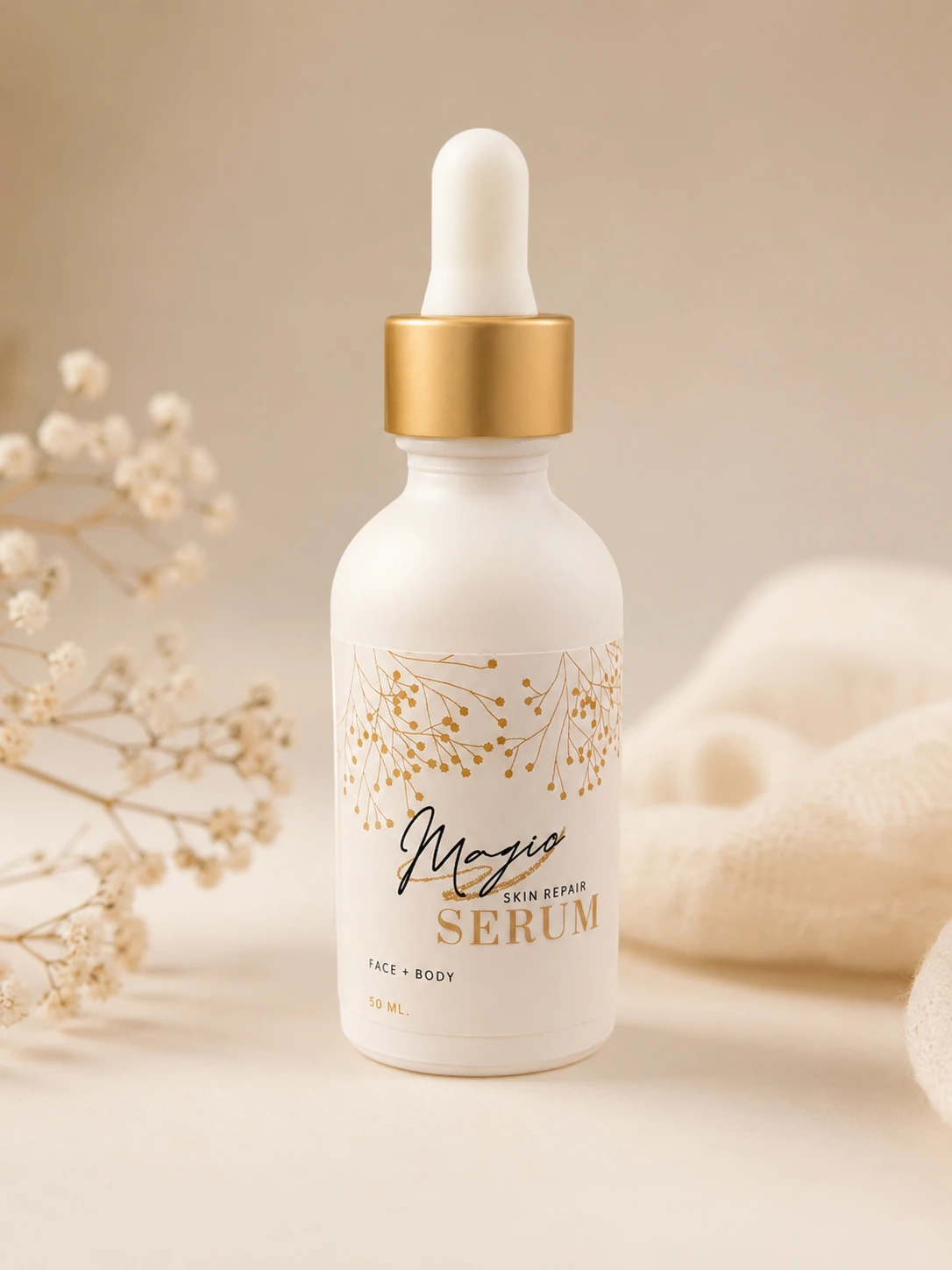
Step 1 · Treat · Morning & night
Magic Radiance Renewal SerumMassage 2–3 drops over the scar in small circles. Only use on fully closed skin.
50ml · $49.99 $29.99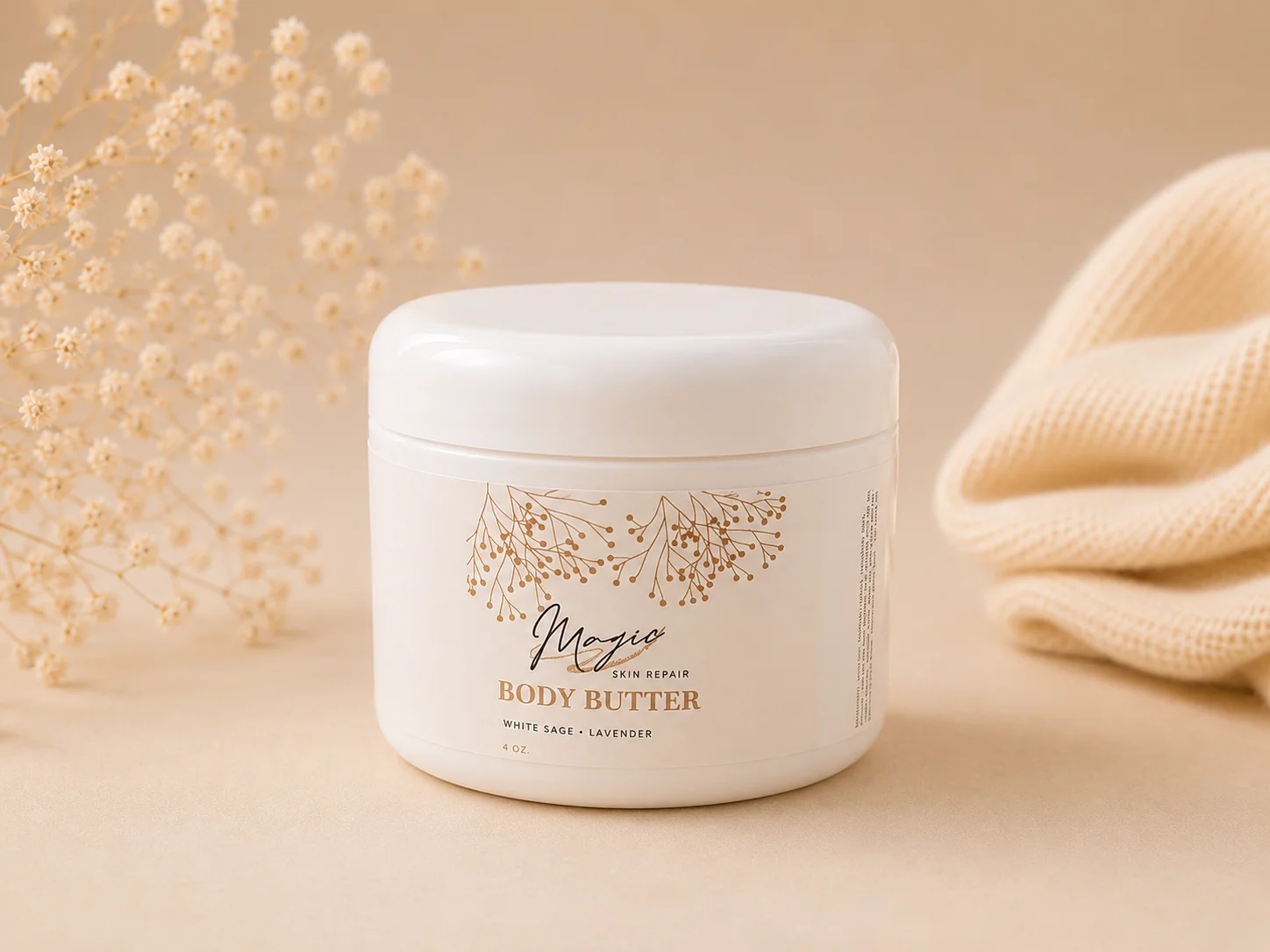
Step 2 · Seal · Daily, after showering
Magic Hydrating Body Butter CremeFor body scars: massage into slightly damp skin to keep it soft and supple.
4 oz · $37.99 $22.79Step 3 · Protect · Every morning
Your sunscreen
Cover exposed scars or apply a broad-spectrum SPF 30+ sunscreen. Magic Radiance Renewal Serum is not a sunscreen.
Safety first
- Never apply skincare to an open wound, scab or stitches — wait until the skin has fully closed.
- Patch test anything new: apply a little to your inner forearm twice a day for 4–5 days and only continue if there's no redness or itch. Magic Radiance Renewal Serum contains grapefruit essential oil, so take extra care if your skin is sensitive.
- Using the derma roller? Keep it to 1–2 times a week, sanitize it before and after every use, use light pressure, never share it, and never roll over broken, irritated, sunburned or breakout-prone skin, cold sores or warts. Stop if your skin stings or stays red.
Cosmetic skincare, not medical treatment. Individual results vary. Free US shipping over $75 · 15-day returns on unopened items.
More questions
Magic Radiance Renewal Serum morning and night over the scar, plus Magic Body Butter for body scars like C-section or surgical scars.
Yes, it's made for the face, neck and targeted areas. If you're still breaking out, treat the acne first and avoid rolling over active breakouts.
No. Keloids are a medical concern — please see a board-certified dermatologist.
Keep reading
Sources
- American Academy of Dermatology — Scars: Overview
- American Academy of Dermatology — Scars: Signs and symptoms
- American Academy of Dermatology — Scars: Diagnosis and treatment
- American Academy of Dermatology — 6 skin care tips for a lifetime of healthier skin
This guide is general skincare information, not medical advice. For a diagnosis or treatment, see a board-certified dermatologist.